Little Acorns Pre-School – ‘From little acorns mighty oaks grow’

On behalf of Little Acorns, I would like to warmly welcome you to our happy and friendly Pre-School.
Starting Pre-School is often a young child’s first steps away from their family environment and we are very aware of the responsibility of this task.
We pride ourselves on fostering an atmosphere of care and security, which is so important in giving children the confidence to try for themselves.
We have fantastic facilities which enable us to provide your child with a varied, fun, educational start to their school lives.
As we are part of the school the children will join the rest of the school for some assemblies, enrichment events and to share learning activities.
They also have a shared play area with the reception children which will help them to become familiar with being in amongst the older ones.
What We Offer
As a Pre-School we have 12 available places for each session of the day (our sessions run between 8.45 to 11.45 and 12.15 to 3.15 each day of the term (lunch is available between 11.45 and 12.15).
With these small numbers of children and our high child to adult ratio we are able to provide rich and exciting development opportunities for every child.
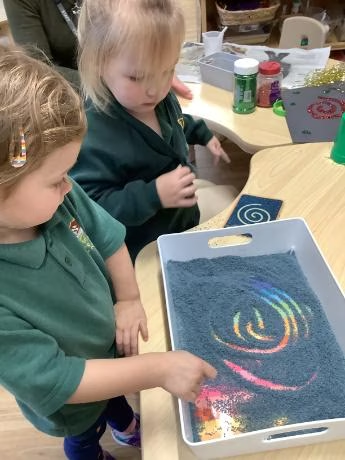
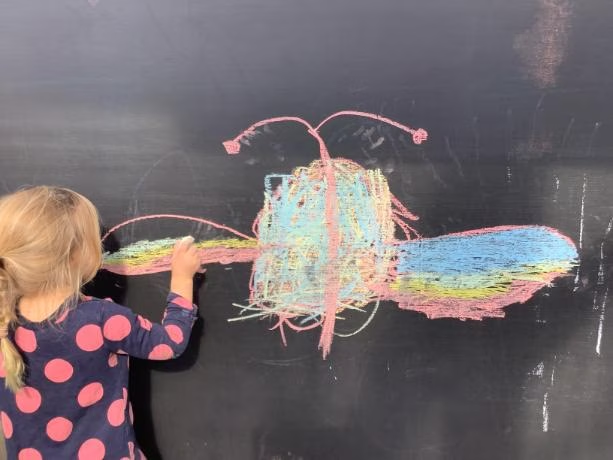
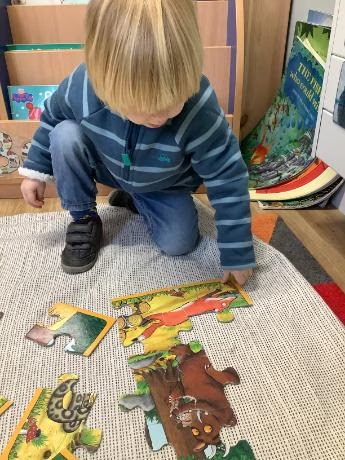
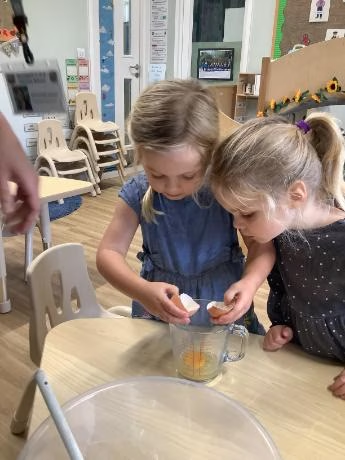
Each day a range of activities are set out in every session which encourage and stimulate learning across the 7 areas of learning. Our team use a number of strategies to ensure that every child leaves these activities with the best experience possible.
We record these interactions using Tapestry. Observations are made regularly on Tapestry and these are sent to parents so they can support their child at home.
Our Additional Provision
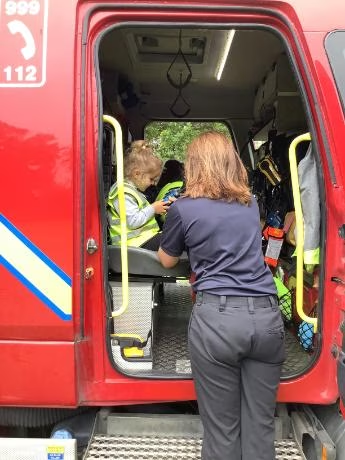
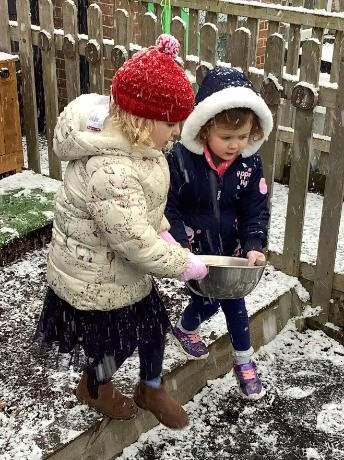
We aim to give every one of our ‘Little Acorns’ the widest range of experiences.
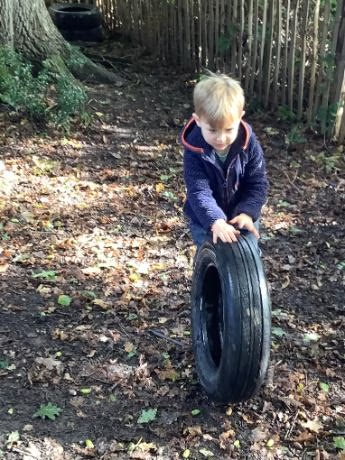
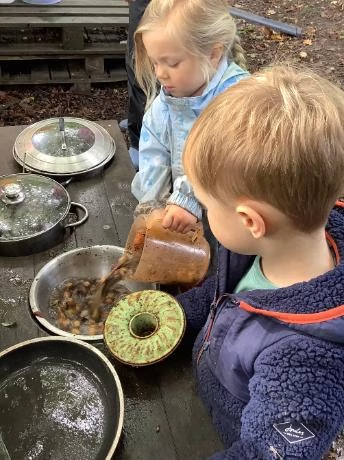
Every day there are planned activities which focus on the 7 areas of learning both inside and outside of the classroom. These activities will link to the ‘theme of the week’ or the larger whole term’s learning journey.
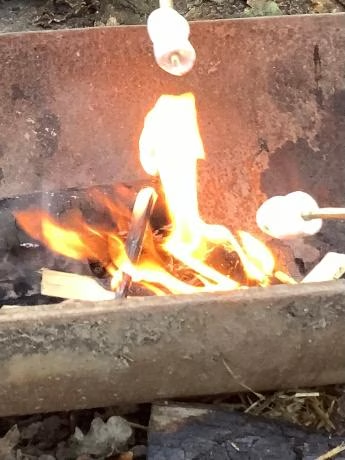
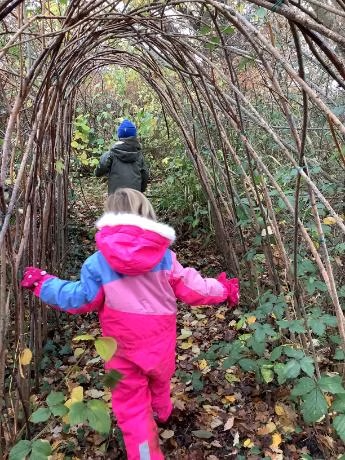
Mrs Cassé takes us to Forest School once a week. In addition to this, we are taught PE using a multiskills programme.
Forest School
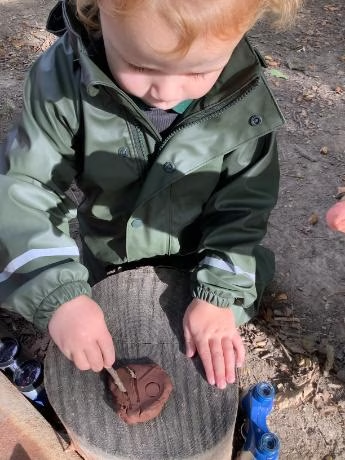
Forest School – which started in Scandinavia – is all about enabling children to explore and experience the natural world through hands-on activities outdoors. The concept has proven to develop the self-esteem and confidence of pre-school children through activities that involve creativity, working together and child-led learning.
As children explore the natural habitat, they become more in harmony with nature, bringing a sense of belonging and contentment. Forest School is also a place to assess risk in a safe environment. This challenging play helps develop self-confidence, competence, emotional resilience and a sense of independence. Without risk and challenge, children are at risk of losing their sense of aspiration and ambition.
PE
One of the greatest benefits of physical education is to improve the physical health and mental health at the same time. Children who are involved in regular physical education are much more likely to have better physical health when compared to those who don’t. For those children introduced to physical activity of increasing intensity, their hearts and bones are offered a range of benefits.
There is an increase of cases of cardiovascular health issues among children nowadays, so to curb this, the NHS recommends at least an hour of moderate to vigorous physical activity every day for children. There is scientific proof that physical activity minimises obesity in children. This can all be achieved through physical education with the right primary sports equipment. Running and cycling style activities are very useful.
Considering mental health, physical education has the potential to greatly boost children’s memories, as well as improving their concentration. Children are always learning, even at those early years, so having physical education is very important to facilitate their learning. Such opportunities can increase the chance of academic benefits. In many cases, these children can solve a range of complex skills thanks to their improved creativity.